
Online Performance Triggers: from SEM to Remarketing

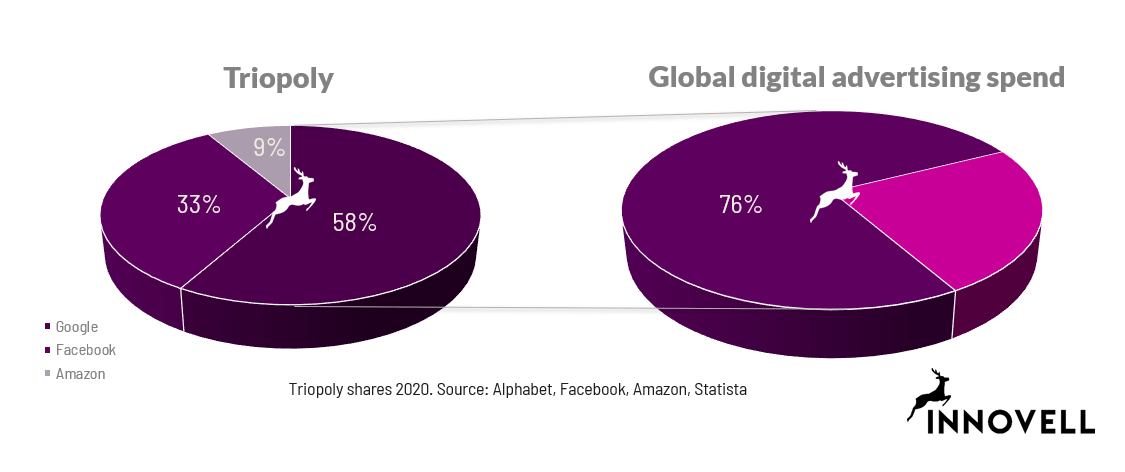
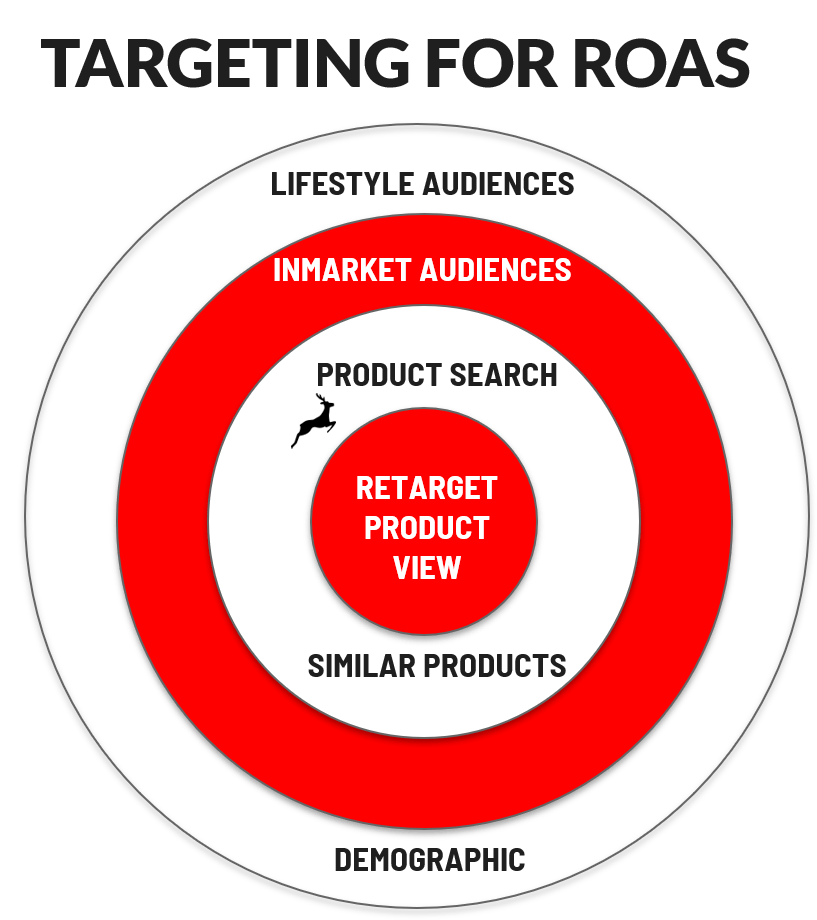
Below is my presentation from SMX London 2013. It is an Online Marketing case study which traces performance back over 4 years with a focus on the introduction of Display Remarketing into an online Marketing Mix dominated by Search Engine Marketing. My favourite slide is the one on the right.


Lovely French Words for the International Search Summit

I will be speaking on the International Search Summit in London tomorrow on the subject of Search Marketing in France. I have done quite some research both through searches for content, image searches and interviews with Industry Experts who have experience with the French market.

I found the “Lovely French words” on a “Franchophile” blog named My Melange. The author suggested some of them and the community added the rest. My contribution was to sort them, give them weight and then throw them into Wordle.net. This is not scientific research but it does give us a nice cloud.

For those attending you will also see input from interviews I did with a handful of Search Marketing Industry Experts. Big thanks for their contributions to:

  • Alan Boughen (Havas)
  • David Towers (MEC)
  • Marc Poirier (Acquisio)
  • David Szetela (Vizion)
  • Shahid Awan (Cheapflights)
  • David Henry (Monster)
  • David Carralon (British Council)

For those not attending ISS tomorrow, I hope to be able to provide the research in one form or the other at a later stage. I will make sure to announce that via twitter @soanders.

For those attending, you will get a chance to hear my own opinions as well – see you tomorrow :-)


Death of Marketing

When I graduated from business school back in the last century, the Internet was just starting to expand beyond army and universities. The commercial internet was emerging. I tried the best I could to apply what I was taught in my Marketing courses to this new thing that came upon us, the World Wide Web. I tried to apply Kotler”s 4 P’s to this new world with very limited success:

  • Price – nope, it’s free.
  • Product – well not quite, more like a service.
  • Promotion – wasn’t the promotion a bit within the Product?
  • Place – euh…

If you would like to explore the old world of marketing check out this Wikipedia page: http://en.wikipedia.org/wiki/Marketing_mix

Old fragments of Marketing

Set aside Philip Kotler’s Marketing theories, there were other things I had been fascinated by in Business School. For example something called Network Marketing – this was an approach to interaction between big suppliers and big client organizations where you would analyse and influence according to the network of people within the organizations. This of course had strictly nothing to do with the other network, that of interconnected servers across the world where the humans were on the outside and the machines on the inside… Much as I admired and respected my tutor, his opinion with regards to the Internet was close to disgust. Relations should be between people, not between computers.

Another branch of Marketing I had found extremely interesting was that of Retail Marketing and I found a few elements I could transpose to this new world: Entry Marketing, Exit Marketing and the notion of “customer flow” within a commercial oulet – store or supermarket. But still the rules-set did not really seem to apply to the Internet.

So, what else can you do when you are a bright young graduate with great adventures ahead than to proclaim the Death of Marketing. This projection was quite simple: the old framework did not apply to the new economy and the new economy would gradually replace the old economy so the old framework was necessarily dead. The King is Dead, long live, euh who? What?

How do you Proclaim in a World with no rules?

I should have probably written a book about it but would that make sense in this new world? I couldn’t be sure that a “book” wasn’t already an obsolete means of commundeath of marketingication anyway. So I stuck to a simple web site format. It was not my first website and a part from its proclamation, it didn’t really have an objective: there was no price, no product, the place was anywhere in the world where someone would consume it and the promotion was absent.

Little did I know that I had just committed my first act of what would later be known as Content Marketing at that stage…

In 2013 the Information Society has indeed changed our world and a new form of marketing is gradually emerging. It is strongly anchored in Contents and their Distribution on the Internet. I will be describing my view of this new article in a future post which is likely to be entitled the Digital Lotus.

Revolutions and Technology

In recent years the world has changed much more than I would have ever expected as a disillusioned teenager with a tendency to be depressed over the State of the World back in the 80s.

The Importance of Road signs
I had the immense privilege of visiting Prague in 2010. Prague is the capital of the Czech Republic (you knew that – I am just reminding you). In my preparation to go there I consulted the Wikipedia page and got myself lost on the internet starting with Wikipedia: http://en.wikipedia.org/wiki/Czech_Republic

In 1968, the Czech tried to reform the Communist regime. The event is known as the Prague Spring and it ended with an invasion of Prague by the Warsaw Pact countries. Tanks rolled into Prague and the country was occupied for the many coming years.

What did the Czech do to disorient their invaders? Well the story says they went out and painted all the road signs so only the signs pointing to Moscow would remain visible. Information War at it’s best! I wonder how much impact this would have on the invasion troops  - and I try to remember Life before GPS…

The Arab Spring and Social Media
I live in a country which went to War during the Arab Spring – like many other Europeans, I have lived most of my life with peace. In the recent Tunisian, Egyptian and Libyan uprising, I like to imagine that one of the big facilitators for an Emerging Democracy is Internet technologies (that would make all those years I spent in front of a computer screen worthwhile, wouldn’t it?). Diving into this, there are many pieces of evidence of how Internet and mobile technologies have been important factors

  • Iran 2009: A young girl is shot by the Iranian army. Someone grabs a video with a mobile phone publishes on Youtube and this is tweeted and retweeted around the world bringing world fame to Twitter and bringing the World’s attention to events in Iran.
  • Tunisia 2010: “Thanks Facebook” graffiti: http://www.ndi.org/node/17818 Who cares if you failed your IPO after something like that?
  • Egypt 2011: the revolutionaries worked systematically for years building up their contact networks. Facebook was one of the major means of mass-communication for organizing demonstrations.
  • Libya 2011: immediately after the uprising started, colonel Khadafi cut the mobile network and started his systematic TV propaganda. Those were some of his most powerful weapons until the opposition got organized.


So are Internet Technologies Good or Bad?
Internet technologies seem to provide a phenomenal potential for opening up for Democracy. Some are starting to say too much.Wikileaks are publishing classified information obtained through a pursuit for extreme freedom, hackers are attacking major corporation. If you know how to read a logfile, open one and have a look at what is really happening on a webserver – you will be surprised at the amount of non-human traffic a webserver attracts and at the number of random hacking attempts that happen on them.

We are back to a technology dilemma – on one hand Internet Technologies are so powerful they can build fortunes, they can build Democracy, they can create Happiness. On the other hand they also have the power to bring down Governments, to break Multinational corporations and to kill a Brand. So are they good or bad?

Well, technologies are really just tools. So of course they are not inherently good or bad – they are merely enhancements of the Nature of the Human Being using them. To that end I cherish their power as an agent of change as I have always thought we needed some. And I guess I am naively hoping there will be more improvements than destructions at the hand of of Internet Technologies. Inevitably there will be both.


In 2011 I had the intention to write about ‘something important’ once per internet year (7 per calendar year). The original post for this article was the first outcome of that intention.

Internet Marketing Basics in 1997

In 1997 I wrote some articles on Internet Marketing. This was before WordPress. It was before Paid Search, before Facebook, before Twitter and it was before there was any real market on the Internet. My articles were optimised for Netscape Navigator and a 640×400 screen resolution. This article picks up the themes from the state of Internet Marketing in 1997.

“A Web presence may only be a part of your communication strategy, but for some (bright) companies, it has become a part of their marketing strategy, and for other (brilliant) companies it has become a part of their global strategy.”

In 1997 the word on the street was already “Content is King” but most companies would not have understood that a real revolution was under way. Building a web site was a must – nobody questioned it and therefore didn’t really know what to do with it once they had it. When you had a web site, you were on the internet and anyone in the world could find you.

The main themes in Internet marketing in 1997 were clearly focused on the strategic position of this media. Web sites were built on the basis of a printed Graphic Design as if they were brochures and budgets were established for the creation of a Web site only. Once it is launched you will have visibility for ever.

At the time there was little thinking beyond the Website. Few companies would have an Internet Strategy with defined landmarks and objectives.So what did Internet Marketing look like back then? The below model was my view of the matter at the time:

  • Entry Marketing: getting the visitors to your website
  • Exit Marketing: optimising the outcome of the visit

All of this still exists today although the names are different. Instead of Entry Marketing we talk about Acquisition or about Inbound Marketing and instead of Exit Marketing we talk about Engagement or Conversion Optimisation. This same chart would look something like this today:

Inbound Marketing
(Entry Marketing)

  • Search Engine Marketing
  • Partners and Affiliates
  • Display
  • Emailing
  • Social Media Marketing
Engagement and Conversion
(Exit Marketing)

  • Personalisation
  • Live person engagement
  • Contests
  • Content marketing
  • Conversion optimisation

2 big things have changed in 2012. 1) Big Data. The amount of data available for marketers has exploded and 2) Interweaving channels. Communication channels are interweaving and the Zap generation of “fragmented consumers” are constantly changing their behaviour within Digital Media.

Digital Marketing is no longer about optimising a structured path of Economic Man through an Internet Funnel – it is about wiring contents for maximum distribution and it is about constantly tweaking multiple levers on the basis of thousands of data points to maximise the value users take from content and bring back to brands, rock-stars and products.